ICMHS Blogs

The Impact of Online Learning on K-12 Education Today


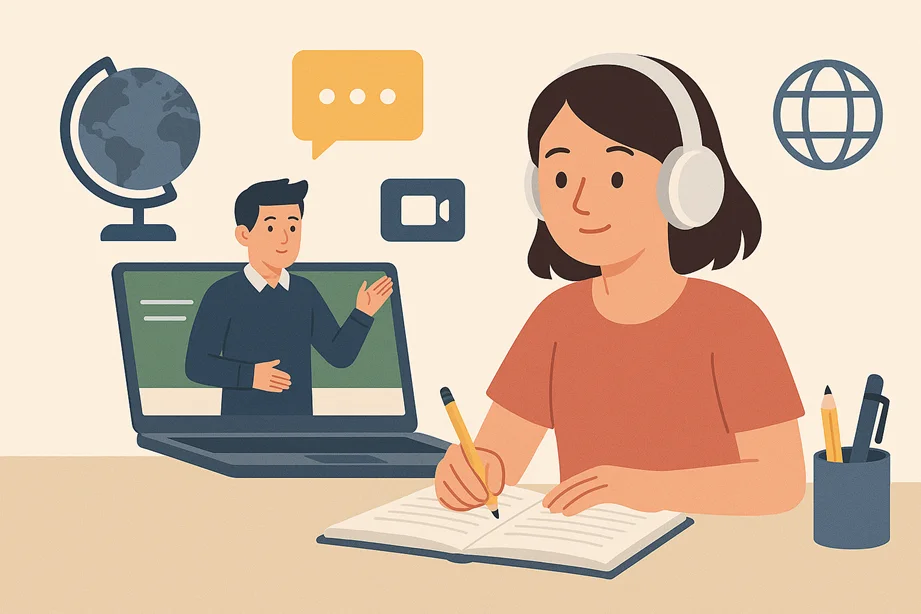
"# The Impact of Online Learning on K-12 Education Today\r\n\r\nThe digital revolution has fundamentally transformed every facet of modern life, and education is no exception. With the rapid proliferation of online learning platforms, there is a paradigm shift in K-12 education today. Due to its convenience and adaptability, online education has become an increasingly prevalent mode of education.\r\n\r\nOnline learning offers unprecedented opportunities for children who would otherwise have limited access to education. While the ease of accessibility and personalized attention are quite alluring, the reality of online learning’s impact is far from uniform. It presents a complex tapestry of benefits and drawbacks intertwined in the digital education.\r\n\r\n---\r\n\r\n## Positive Implications of Online Learning\r\n\r\n### Anywhere, Anytime!\r\nCambridge schools provide seamless access to class notes, assignments, and project details through the parent portal. This ensures that learning materials are available to students anytime, anywhere, empowering them to take charge of their studies. Whether they want to review a lecture or need to catch up on missed classwork, these platforms act as centralized hubs for academic resources.\r\n\r\nThis adaptability is particularly beneficial for students engaged in high-level training in sports or performing arts, as it saves them from the rigidity of traditional schedules and provides them with more time to focus on their specialized pursuits.\r\n\r\nParents, too, benefit from these portals by gaining insights into their child's progress and curriculum. Cambridge Schools prioritize collaboration between educators and families, ensuring that parents remain informed and involved in their children's academic journey.\r\n\r\n### Address Diverse Learning Needs\r\nOne of the most notable impacts of online learning is its ability to cater to diverse learning styles. Cambridge schools offer engaging and interactive content in the form of videos, simulations, and quizzes to help students grasp complex concepts at their own pace. The use of advanced interactive panels and virtual classrooms helps create dynamic lessons that promote collaboration and critical thinking.\r\n\r\n### Access to a Wide Range of Resources\r\nWith a wide range of educational resources available online—through libraries, virtual simulations, and field trips—students are exposed to a broader and more diverse curriculum. It is a blessing for the gifted students in Cambridge schools as they can explore topics beyond the limitations of traditional textbooks and classrooms. In addition, they can connect with people from around the world, fostering a deeper understanding of different cultures.\r\n\r\n---\r\n\r\n## Negative Implications of Online Learning\r\n\r\n### Limited Social Engagement\r\nToo much exposure to online learning reduces opportunities for face-to-face interactions, potentially affecting the development of interpersonal skills. Virtual classes often lack the spontaneity and interpersonal communication that otherwise come with offline classes. Consequently, prolonged exposure to online learning platforms impacts the socio-emotional well-being of an individual.\r\n\r\n### Accessibility Issues\r\nAbsence of proper devices or a suitable learning environment can create unequal opportunities. Crowded and noisy households hinder learning by disrupting focus, resulting in students missing out on essential instructions. Stable internet is crucial for uninterrupted learning. The internet across remote rural areas in India faces connectivity challenges of slow speeds and frequent outages, leaving students helpless in such situations.\r\n\r\n### Strict Monitoring and Discipline\r\nOnline learning requires strict discipline, failing which it can hamper the learning process significantly. Inefficient use of time can lead to procrastination, which further undermines the learning process. Unlike traditional classroom settings, online learning lacks external supervision, making it essential for students to cultivate self-discipline and time-management skills. Failure to do so can result in incomplete assignments, poor academic performance, and increased stress—ultimately reducing the benefits of online education.\r\n\r\n### Information Overload\r\nOften students weak in academics struggle with excess information provided in learning platforms, leaving them confused about what is essential and where to focus. With the continuous influx of new content, it can be overwhelming for students to keep pace with learning.\r\n\r\n### Not Apt for Practical Education\r\nTeaching hands-on skills online can be more challenging. While theoretical concepts can be efficiently taught online, subjects like physical education, painting, sculpture, music, and drama—which call for movement-based learning—are hard to simulate online. These subjects often require personalized guidance and access to materials, instruments, or performance spaces, which cannot be effectively supplemented through online learning.\r\n\r\n### Assessment and Practical Learning Gaps\r\nFair and reliable assessment of students’ learning on online platforms is a challenge, as students can take help from external resources in completing tests or assignments. Online platforms limit teachers’ ability to closely monitor students' behaviour and performance, especially in activities involving scientific experiments and art projects. Providing individual feedback on students’ work therefore becomes far more challenging and less effective in virtual settings.\r\n\r\n---\r\n\r\n## Conclusion\r\n\r\nTo sum up, the effectiveness of online learning is influenced by multiple factors, and adopting a balanced approach that merges online and offline learning—as practiced in Cambridge schools—can help optimize its potential benefits. For an online program to succeed, careful attention must be given to the curriculum, the facilitator, the technology, and the students. Moreover, it is essential for parents and educators to actively monitor their child's online activity to foster a productive learning environment.\r\n"

Related blogs